Tri-County Humane Society approached me with a simple but important challenge: how to convince more people to open their homes to foster animals?
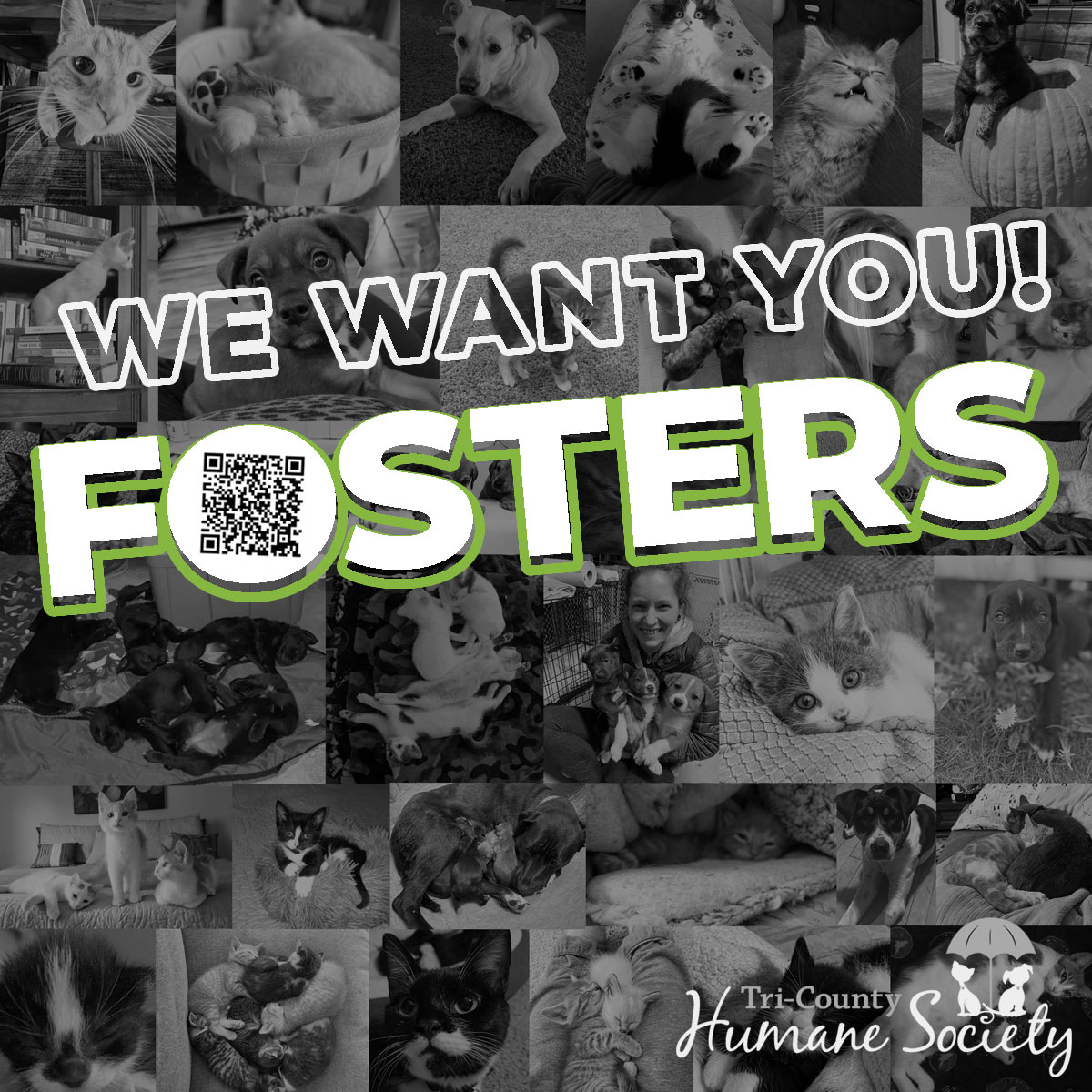
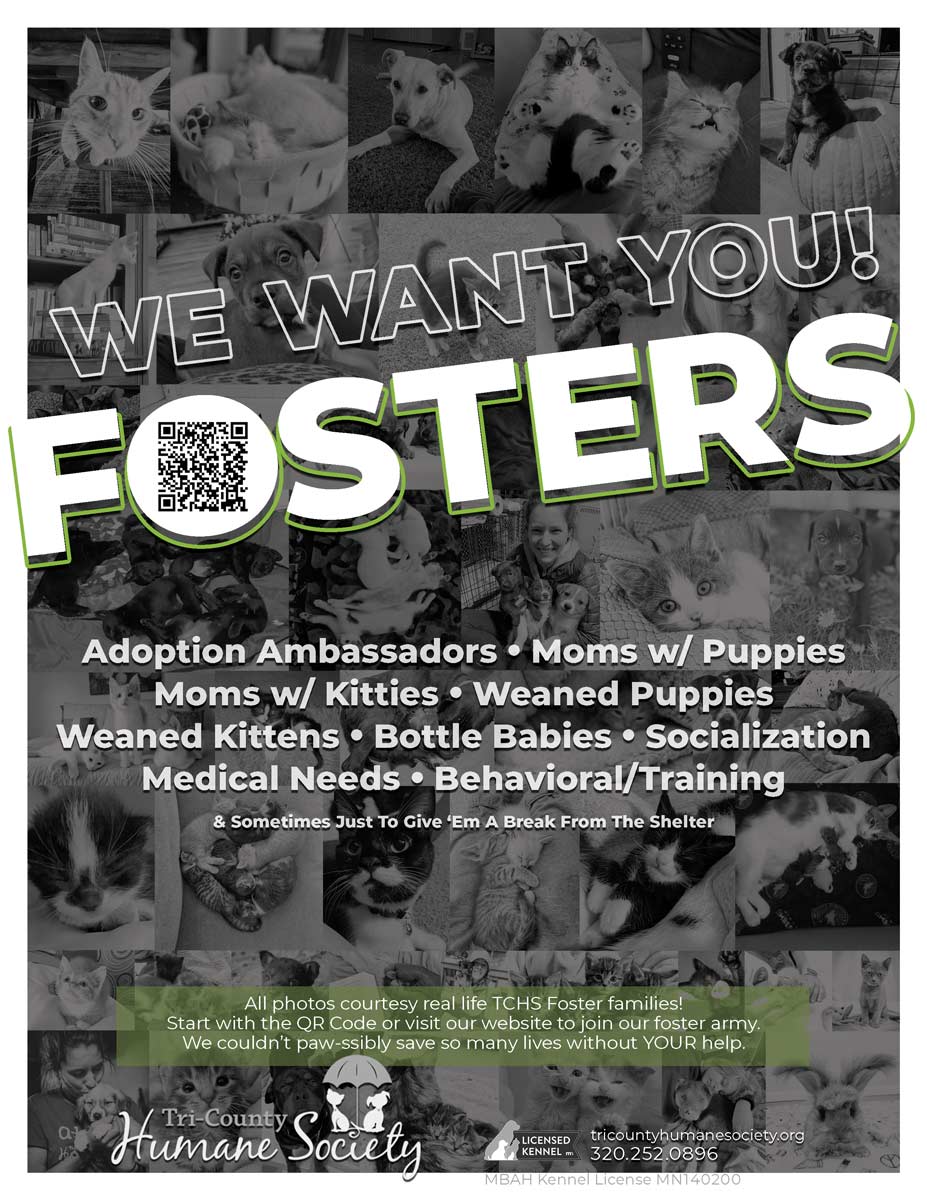
The project started as a foster recruitment poster with a QR code and a digital slide for the shelter’s television display.
My first instinct was to think beyond the individual deliverables. If we were asking people to foster, the message needed to reach them where they already were, so we expanded the concept into a social media campaign as well.
The creative challenge came when I couldn’t find stock or existing shelter photography that felt right for the message. I could have settled for something that was “good enough,” but instead I asked the shelter’s foster community for help.
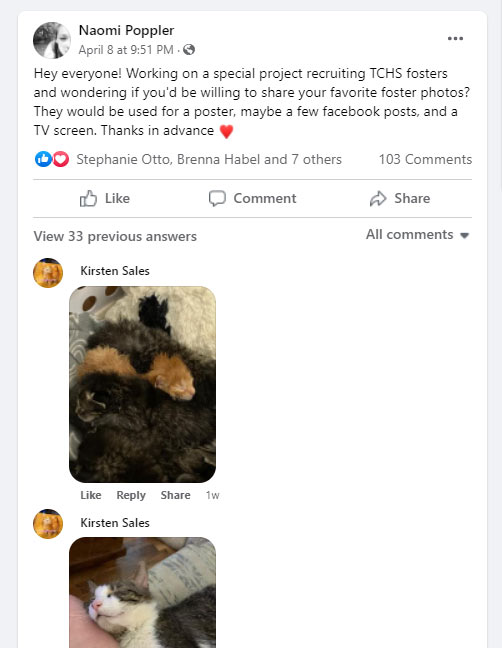 I posted a request in the shelter’s Facebook foster group asking families to share their own foster photos.
The response was far beyond what I expected: more than 100 comments filled with photos and stories from foster families.
Those real images transformed the campaign. Instead of asking people to imagine what fostering might be like, we could show them the people and animals already participating in it.
The resulting campaign gave the shelter a cohesive set of recruitment materials across print, digital signage, and social media while turning the foster community itself into part of the campaign.
For me, the most valuable lesson wasn’t about graphic design. It was about finding the audience closest to the problem and inviting them into the solution.
Sometimes the best creative resource isn’t a stock library. It’s the community you’re trying to reach.